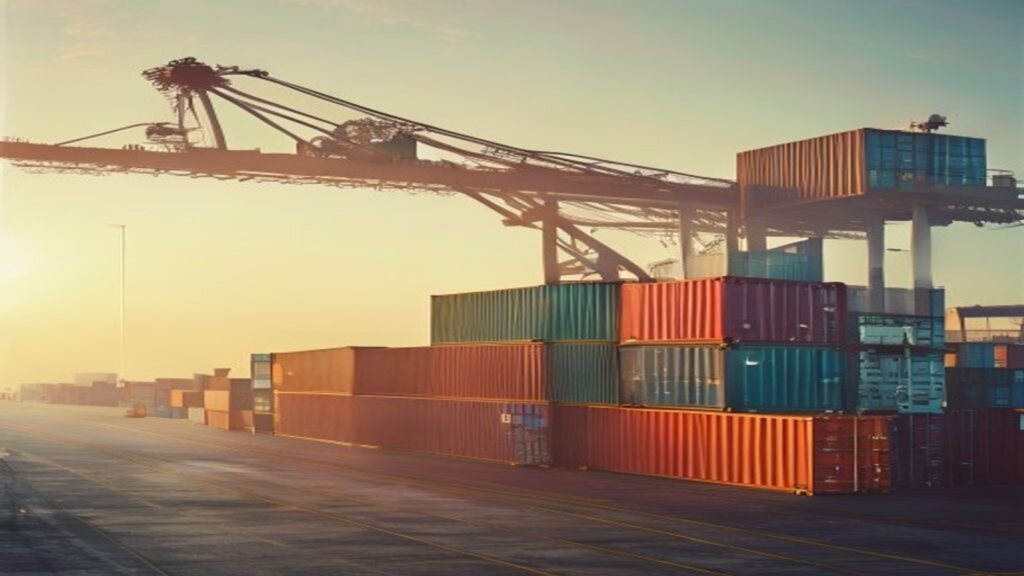
A tariff is a tax on imported goods, collected at the border from the importer of record. That single procedural fact resolves much of the confusion in the political debate: the cheque is written by an American company, not by a foreign government. What happens next — whether the cost is absorbed by the importer, passed to consumers, or offset by the exporter cutting prices — is an empirical question, and it has been studied intensively.
The pass-through evidence
Studies of the tariffs imposed on Chinese goods and on steel and aluminium beginning in 2018 found unusually complete pass-through to U.S. import prices. Foreign exporters did not meaningfully cut their prices to preserve volume, which means the duty was borne domestically, split between importing firms compressing margins and consumers paying more. That result surprised some economists, because standard trade theory predicts a large economy can shift part of the burden onto foreign suppliers.
Read moreWhat a 10-K Really Tells You About a Company
Downstream effects were also measurable. Duties on intermediate inputs such as steel raised costs for American manufacturers using them, and employment gains in protected industries were offset — by most estimates more than offset — by losses in industries facing higher input costs and in exporters hit by retaliation. Trade flow and duty collection data underlying this work is published by the U.S. International Trade Commission and by the U.S. Census Bureau.
Why the political calculus differs from the economic one
The costs of a tariff are diffuse — a few dollars spread across millions of purchases — while the benefits are concentrated in identifiable plants and communities. Diffuse costs generate no organised constituency; concentrated benefits generate a very effective one. That asymmetry, familiar from public choice economics, explains the durability of trade protection across administrations of both parties despite broad agreement among economists about aggregate effects.
There are also arguments for tariffs that are not primarily about prices: supply chain security for defence-relevant goods, leverage in negotiations, and responses to subsidised production abroad. Those arguments are legitimate on their own terms, and evaluating them requires weighing security value against measured cost rather than disputing the cost itself.
Read moreHow Credit Scores Are Actually Calculated
Exclusions, drawback and the compliance industry
Tariff schedules are extraordinarily detailed, and classification determines the rate. A product’s tariff code can be the difference between duty-free entry and a double-digit rate, which has produced a substantial industry in classification, exclusion requests and tariff engineering — redesigning a product so it falls under a different heading. Rulings and the harmonised schedule are administered by U.S. Customs and Border Protection.
Rules of origin add a further layer. Under regional trade agreements, whether a good qualifies for preferential treatment depends on where its components came from and how much value was added locally, which means tariff policy shapes supply chain geography well beyond the country being targeted.
What to watch in the data
Three series tell most of the story. Import prices excluding fuel show whether foreign suppliers are absorbing duties. Producer prices for goods using tariffed inputs show whether costs are moving downstream. And trade volumes by partner country show whether sourcing shifted rather than shrank — the pattern most often observed, in which imports from the targeted country fall while imports from third countries rise, leaving the aggregate deficit largely unchanged. Multilateral comparisons of applied tariff rates are compiled by the World Trade Organization.
Read moreWhy Oil Prices Swing Harder Than Oil Supply
The consistent finding across this literature is not that tariffs never achieve their objectives. It is that they are a tax, that the tax is paid domestically, and that any strategic benefit has to be judged against that cost rather than in place of it.
Who bears the cost, and how quickly
The empirical literature on recent American tariffs converges on a conclusion that is politically inconvenient and analytically clear: the great majority of the cost has been borne domestically, by importing firms and ultimately consumers, rather than absorbed by foreign exporters through lower prices. Pass-through has been high and fast in categories with few substitutes and slower in categories where buyers could switch source countries, which is why the measured effect varies so widely across product lines. Retaliation compounds the arithmetic by imposing separate losses on export industries that had nothing to do with the original dispute.
Trade flow and duty collection data are published by the U.S. Census Bureau, and the pattern after a tariff is imposed is usually visible within two quarters: import volumes shift toward exempt origins, landed costs rise, and the domestic industry the measure was designed to protect gains less than the tariff revenue collected. That does not settle whether a given tariff is justified on strategic or security grounds. It does mean the price effect should be treated as a cost of that decision rather than denied.