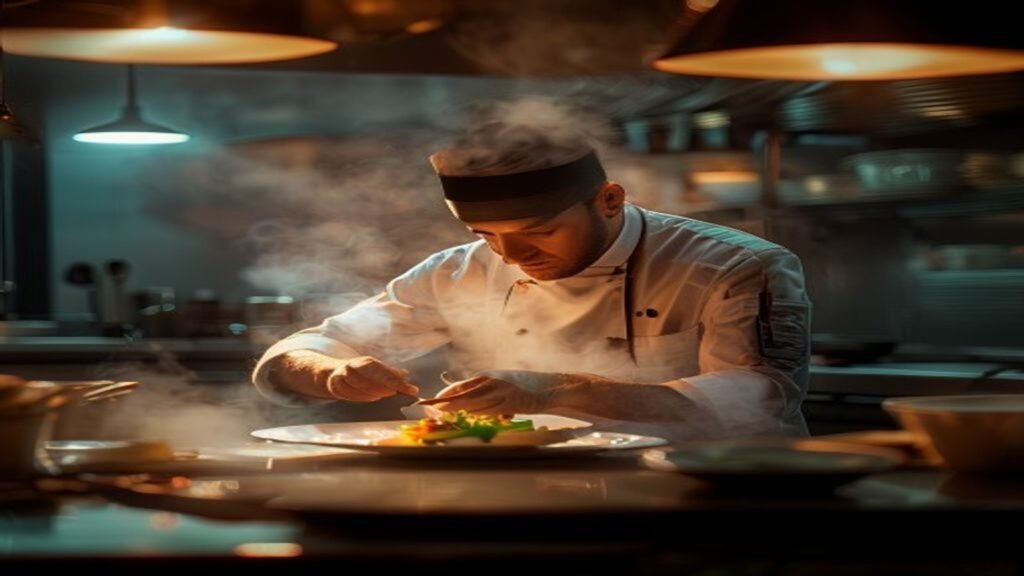
Diners confronted with a tasting menu priced in the hundreds of dollars often assume they are paying for ingredients. Occasionally they are — a few grams of genuinely scarce product can cost more than the rest of the plate combined. Far more often the ingredient is the smallest line in the calculation, and the price reflects labour intensity, real estate, waste and a covers-per-night arithmetic that leaves almost no margin for error.
The cost structure of a high-end kitchen
Food cost in fine dining typically runs at a lower percentage of menu price than in casual restaurants, not a higher one. What rises is labour. A tasting menu with a dozen courses requires preparation that is measured in staff hours per cover: stocks reduced over days, garnishes made individually, plating executed by multiple hands simultaneously. Front-of-house ratios rise in parallel, with sommeliers, hosts and a service brigade that may approach one staff member per guest.
Read moreThe True Cost of Owning a Home in America
Occupancy cost is the second large item. High-end restaurants need locations that affluent diners will travel to, and rents in those districts are set by retail and office competition rather than by restaurant economics. Fit-out for a serious kitchen — ventilation, refrigeration, gas capacity, acoustic treatment — is a capital expenditure amortised across a lease that may be shorter than the payback period. Industry cost and employment data is compiled by the National Restaurant Association.
Covers are strictly limited
A restaurant serving a long tasting menu can usually turn a table once per evening, sometimes not even that. A bistro on the same footprint may serve each table two or three times. The fixed costs are similar; the revenue base is a fraction. That single ratio explains most of the price difference between two restaurants with comparable ingredient quality.
Waste compounds it. Menus built on peak-condition produce and whole-animal butchery generate trim that must either be used creatively or discarded, and standards that reject anything imperfect raise effective food cost well above the invoice figure. Food loss statistics and reduction guidance for the sector are published by the U.S. Department of Agriculture.
Read moreHow Public Companies Actually Set Their Prices
Labour economics changed the model
The traditional fine-dining kitchen was subsidised by unpaid or barely paid apprenticeship, and that arrangement has largely ended — through regulation, litigation and a generation of cooks unwilling to accept it. Minimum wage increases, tip credit changes and overtime enforcement all raised the true cost of the brigade system, and wage data by occupation from the Bureau of Labor Statistics shows culinary wages rising faster than the sector average.
Restaurants responded with structural changes rather than only price increases: service charges replacing discretionary tipping, prepaid ticketed reservations that eliminate no-show losses, shorter weeks with fewer services, and menus engineered around fewer, more expensive covers.
What the diner is actually buying
Understanding the arithmetic changes how to read a menu. A prepaid ticket at a fixed price is usually a sign of a restaurant managing cash flow and waste deliberately, which tends to correlate with quality rather than with gouging. A wine list with a low markup on expensive bottles and a high one on cheap ones is a rational response to the fact that both cost the same to store and serve. And the tasting menu that appears extravagant is often the version of the restaurant that loses the least money.
Read moreThe Grid Storage Technologies That Actually Matter
Guides and inspection systems shape demand powerfully — a rating change can shift bookings for a year — but they do not change the cost structure. The economics remain unforgiving, which is why the failure rate at the top of the market is high even among restaurants that are fully booked. Food safety and operating requirements, which add another fixed compliance layer, are administered through the Food and Drug Administration model code adopted by state and local authorities.
The cost structure behind the bill
Food cost is rarely the largest line in a serious restaurant, and it is almost never the reason prices are high. Labour is, and at the top of the market it is labour of a particular kind: brigades with long training, low ratios of guests to staff, and a substantial amount of preparation that is paid for but never seen by the customer. Rent in the locations that support fine dining is priced against retail alternatives rather than against restaurant economics. Then there are the costs specific to the format, including glassware breakage, linen, deep wine inventory that ties up capital for years, and the low seat turnover that is the entire point of a three-hour tasting menu.
Industry cost and margin surveys published by the National Restaurant Association consistently show thin net margins across the sector, and thinner in the highest-priced segment than customers assume. The uncomfortable arithmetic is that a restaurant serving forty covers a night with a staff of twenty is not overcharging; it is running a model in which the price of the meal must cover a service ratio no other retail format attempts.