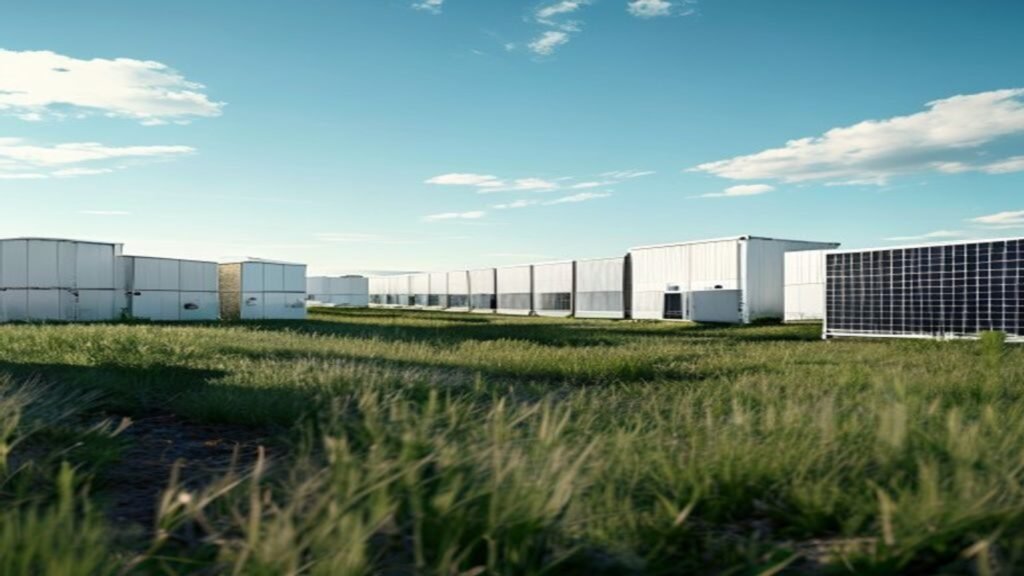
Electricity storage has moved from a laboratory ambition to a commercial industry with remarkable speed. Grid-scale lithium-ion installations now provide several hours of discharge at costs that made them the default choice for new capacity in many markets. The problem lithium solved, however, is a specific one — shifting energy within a day — and the problems that remain are different in kind, not just in degree.
What lithium is good at
Lithium-ion systems have high round-trip efficiency, fast response and falling capital cost, which makes them ideal for absorbing midday solar output and discharging into the evening peak, and for providing the fast frequency response that grids formerly obtained from spinning generators. Their weakness is duration: because cost scales with energy capacity, extending discharge from four hours to forty makes the economics unattractive long before the physics fails.
Read moreHow Semiconductor Supply Chains Actually Work
Deployment statistics and cost trends for U.S. battery storage are published by the U.S. Energy Information Administration, and the growth curve over the past five years is among the steepest in the history of electricity infrastructure.
The long-duration problem
A grid running predominantly on wind and solar experiences periods of several days with low output — weather systems, not nights. Covering those requires storage measured in tens or hundreds of hours, or firm generation, or enormous transmission capacity to import from elsewhere. Each is a different bet, and the cost-optimal mix is genuinely uncertain.
Iron-air and other metal-air chemistries target exactly this niche, trading low efficiency and slow response for very cheap and abundant materials. Flow batteries separate power from energy capacity by storing electrolyte in tanks, which makes long duration cheaper to add. Thermal storage in rock, sand or molten salt is inexpensive per unit of energy but harder to convert back to electricity efficiently. Hydrogen produced by electrolysis and stored underground offers effectively seasonal duration at low round-trip efficiency.
Read moreWhy Companies Buy Back Their Own Stock
Pumped hydro is still the incumbent
The overwhelming majority of installed storage capacity worldwide remains pumped hydroelectric — water moved uphill and released through turbines. It is cheap per unit of energy, long-lived and geographically constrained, and permitting a new reservoir pair in the United States is a decade-scale undertaking. Closed-loop designs that avoid natural waterways have improved the environmental profile and remain slow to license. Licensing of these projects runs through the Federal Energy Regulatory Commission.
Market design decides what gets built
Storage economics depend less on technology than on what a market pays for. Where wholesale markets compensate energy arbitrage only, short-duration batteries dominate. Where capacity payments reward firm availability during defined scarcity hours, longer-duration assets become viable. Where ancillary service markets are deep, batteries earn most of their revenue from services rather than arbitrage — and those markets saturate quickly as more batteries enter. Technical assessments of storage cost and performance projections are maintained by the National Renewable Energy Laboratory.
The supply chain question
Lithium, nickel, cobalt and graphite supply chains are concentrated geographically at both the mining and refining stages, and refining concentration is the tighter constraint. That has driven interest in chemistries using iron, sodium and sulphur — materials whose supply is effectively unlimited — even at a performance penalty. Sodium-ion in particular has moved from laboratory to commercial production for stationary applications where weight does not matter. Critical mineral supply assessments are published by the U.S. Geological Survey.
Read moreWhy Most Corporate Culture Programs Fail
The likely outcome is not one winning technology but a stack: lithium for hours, something cheap and inefficient for days, firm generation or hydrogen for the rare extended lull, and transmission to reduce how much of any of it is needed. Grids are portfolios, and portfolios rarely have a single answer.
Duration is the whole argument
Almost every dispute about grid storage collapses once duration is specified. Lithium-ion batteries dominate the two-to-four-hour band because they are manufactured at enormous scale, respond in milliseconds, and are cheap enough to arbitrage a daily cycle. They are a poor answer for a week of low wind, because cost scales with energy capacity and sitting idle earns nothing. Pumped hydro remains the only mature technology at multi-day scale, and its constraint is geography and permitting rather than engineering. The technologies competing for the ten-hour-to-multi-day band, including iron-air, thermal and various flow chemistries, are competing on cost per unit of energy stored rather than cost per unit of power delivered, which is a different engineering problem with different winners.
Interconnection queue and capacity data compiled by NREL show storage now dominating new project applications, but overwhelmingly in the short-duration band where the economics are already proven. The honest position is that the four-hour problem is solved and the hundred-hour problem is not, and that most public argument conflates the two.